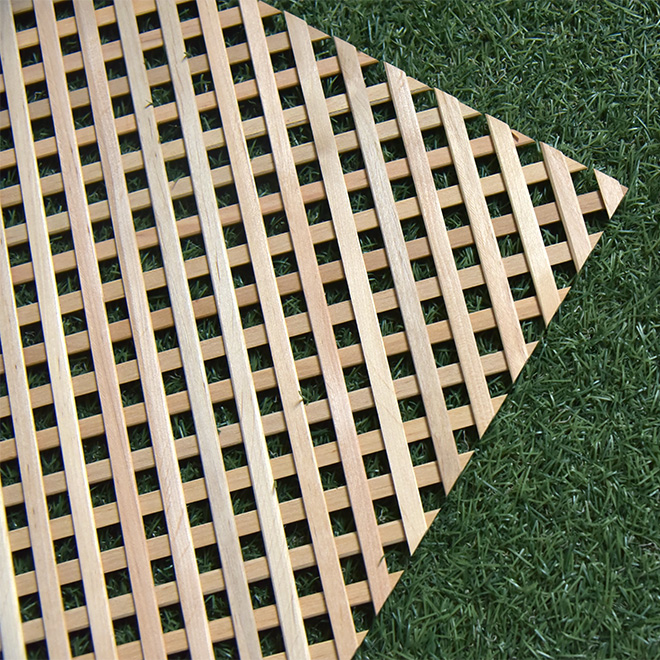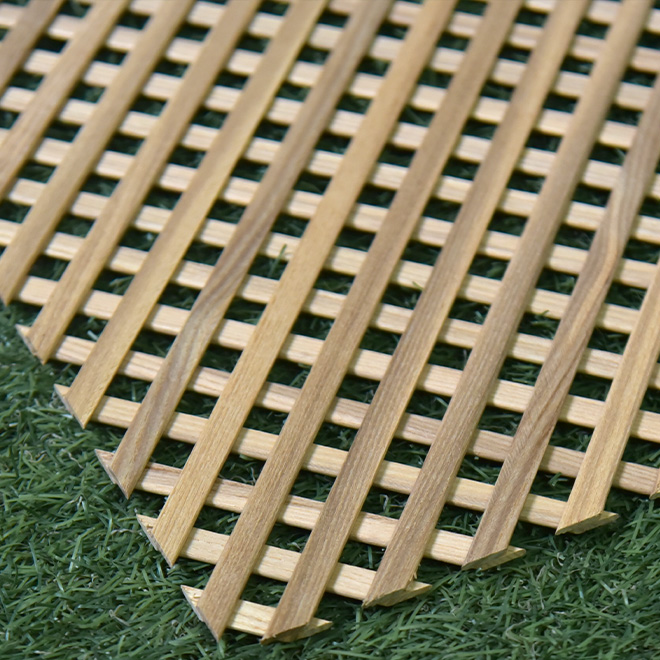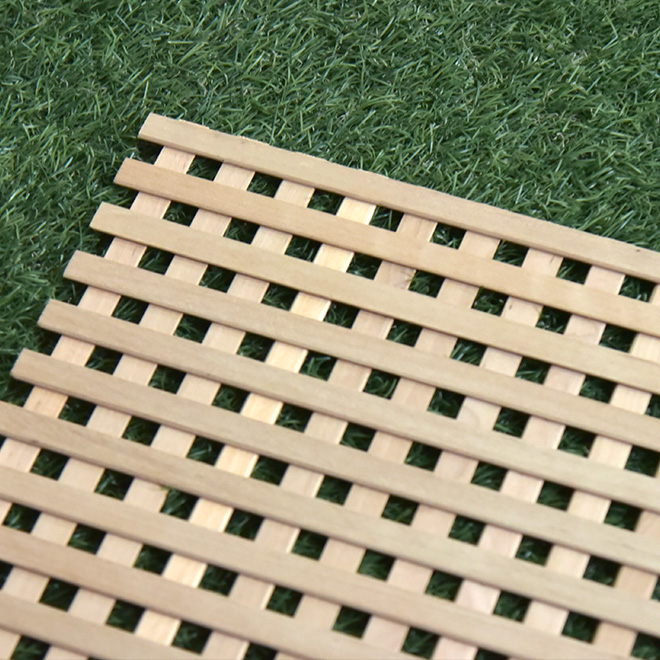
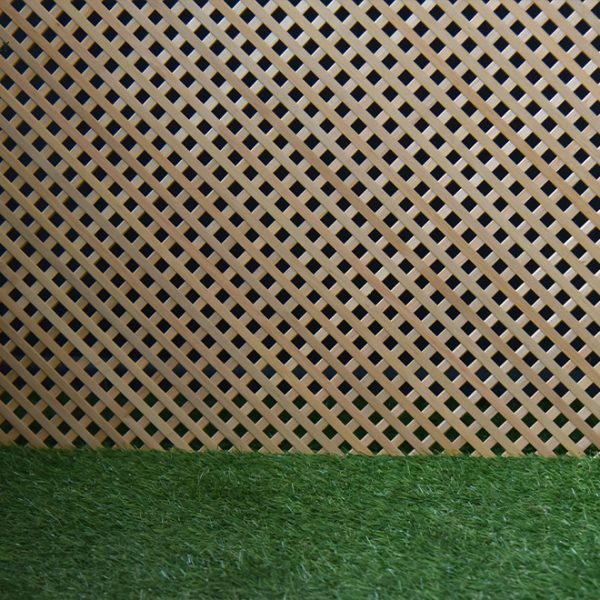
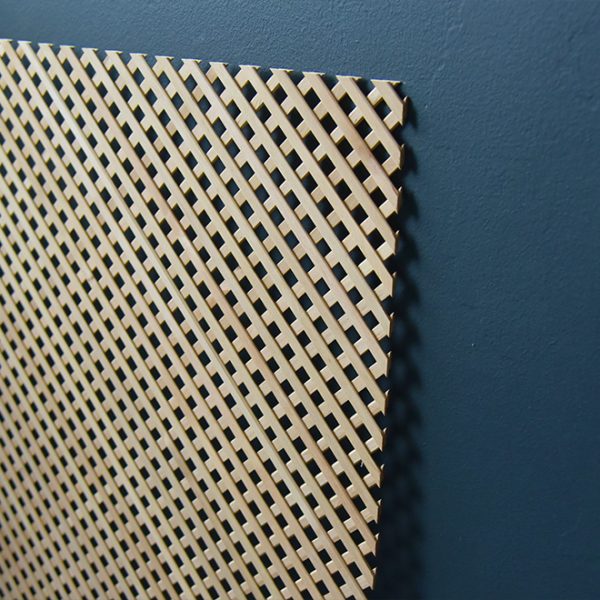
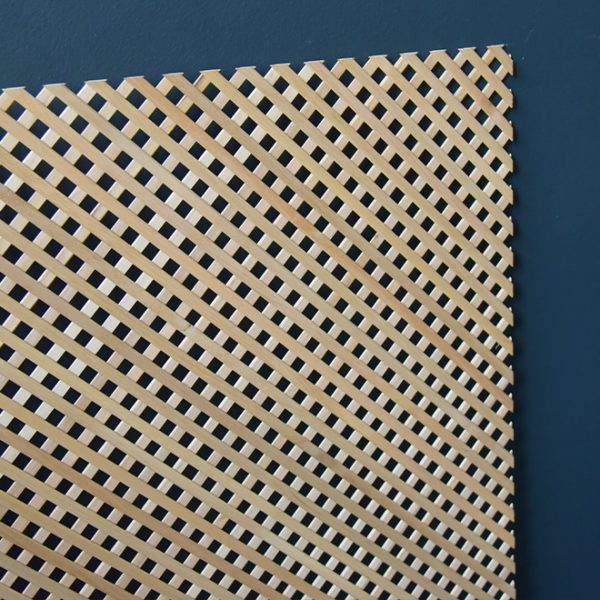
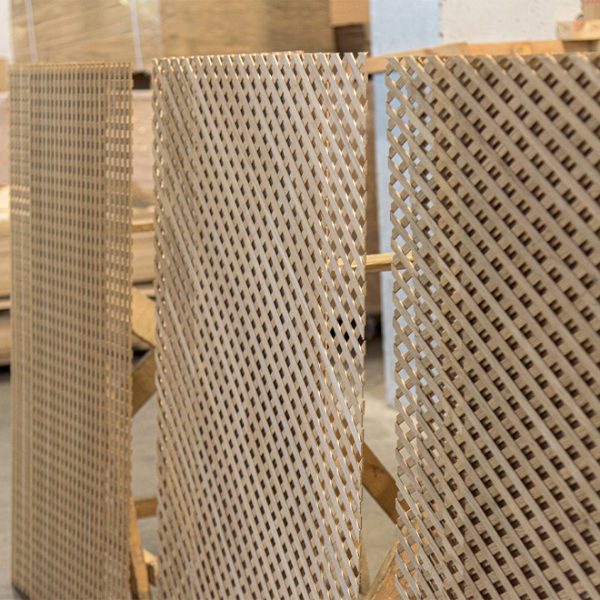
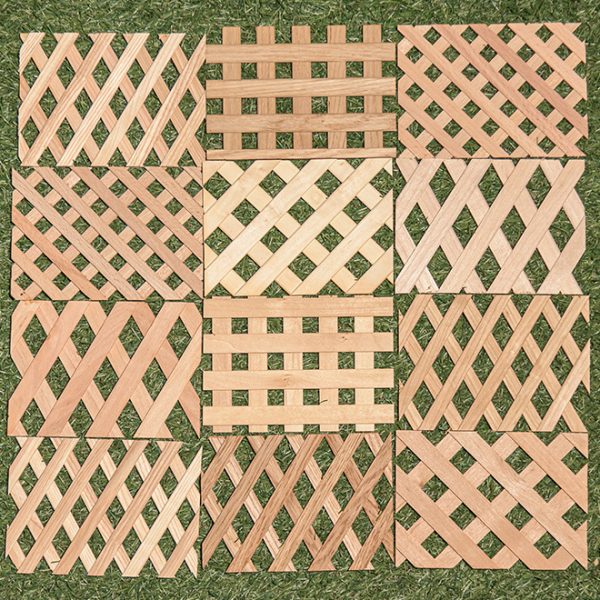
Key Features of Decorative Alder Lattices
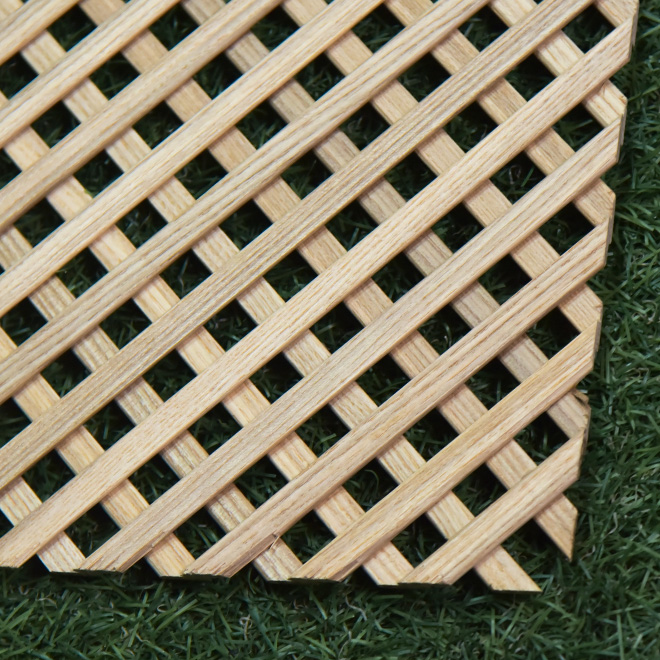
| Wood Species | Alder |
| Lattice Design | Overlapping |
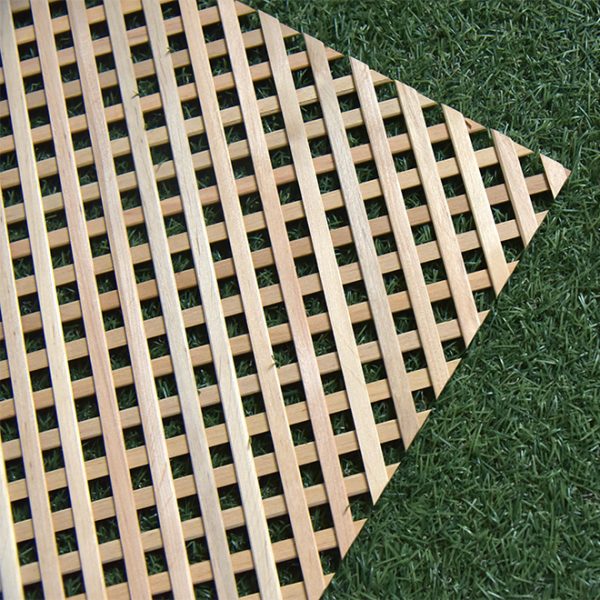
| Cell Shape and Size | 45° Diagonal Square — 10×10 mm / 0.39″x0.39″ |
| Slat Edge | Rounded (R) |
| Slat Size | 15×2.5 mm / 0.59″x0.098″ |
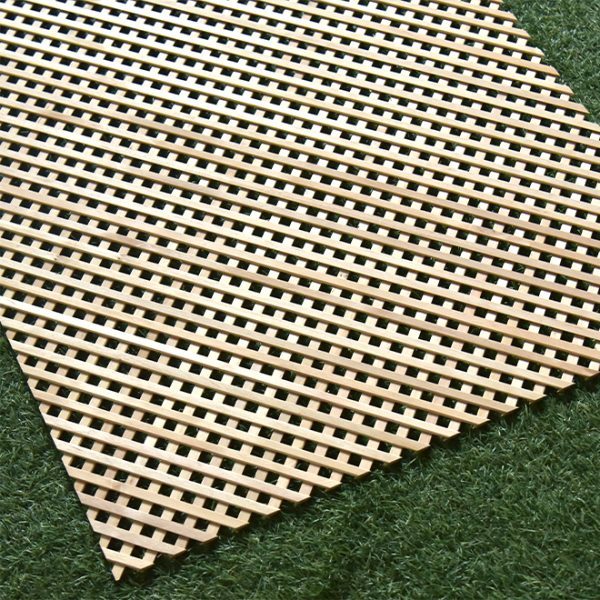
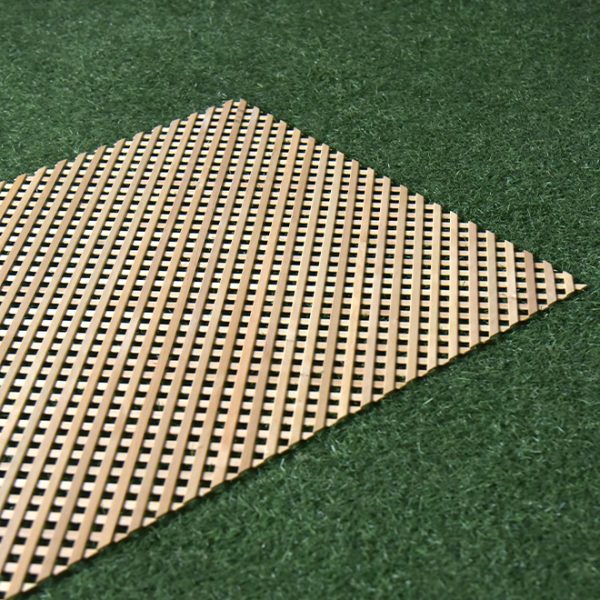
| Lattice Size | 1200x620x5 mm (±0.5 mm) / 47.24″x24.4″x0.19″, custom sizes available by order (from 1,000 units). |
Alder lattices are made from sanded slats, joined in an overlapping pattern and glued with a safe, PVA-based wood glue.
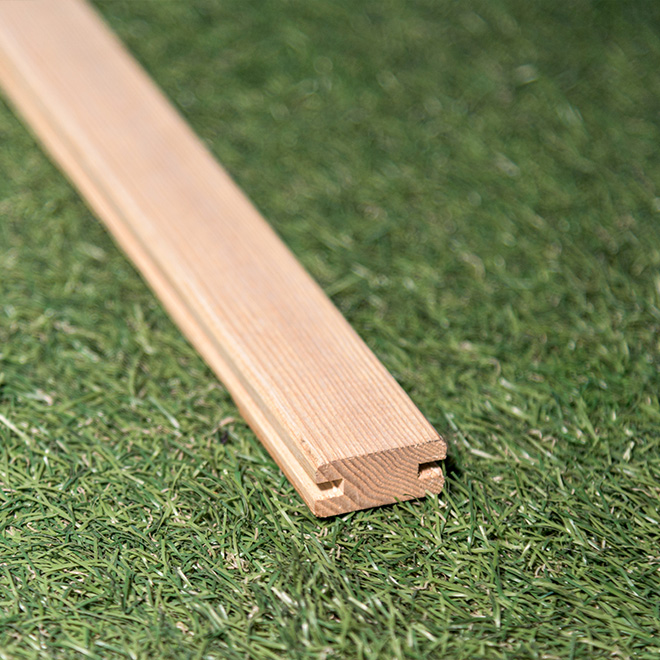
Additionally, the following profiles are available for order:
H-profile — for joining lattices into a larger panel;
U-profile — for framing, creating a border for the product.
Our standard inventory includes lattices made of oak, ash, and alder.
We accept orders for the production of wooden lattices from other species (beech, maple, cherry, walnut, hornbeam, etc.).
Minimum order — 1,000 units.
Applications of Alder Wood Lattices
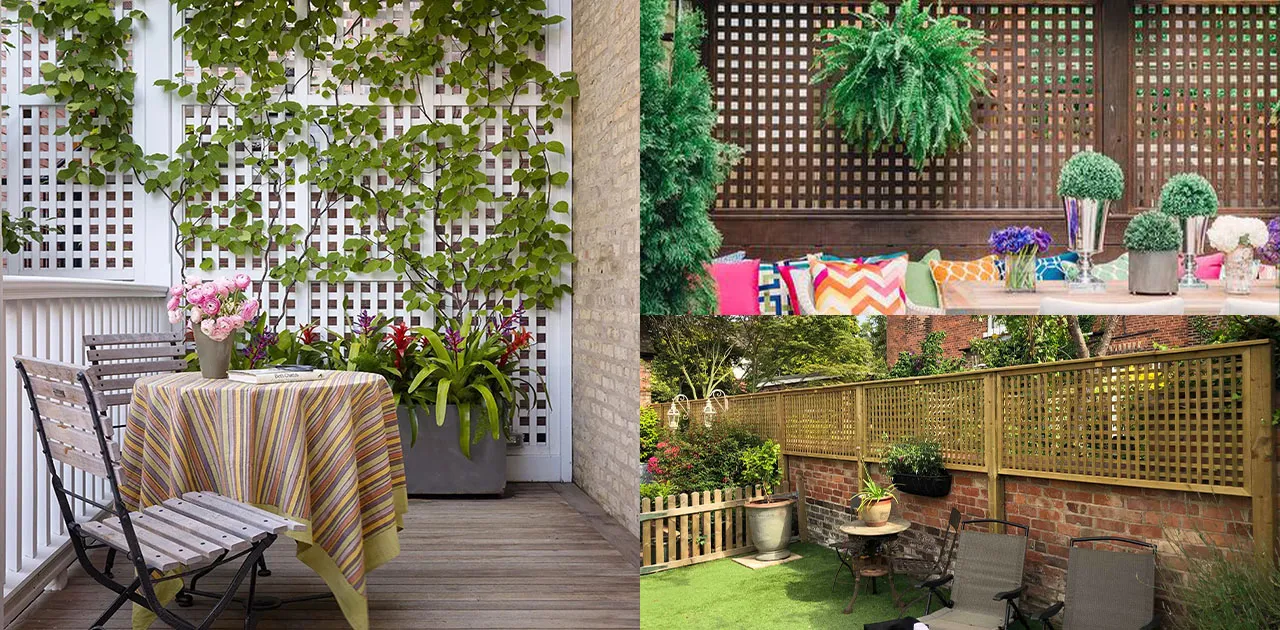
Our partners use decorative lattices in the manufacturing of a range of interior and exterior products. Easy to work with and install, these lattices with their expressive texture have a presentable look and integrate easily into projects of various styles: from country or loft to ethnic and Scandinavian modern.
Framed Furniture Facades
Wooden lattices are integrated into the doors of cabinets, dressers, and nightstands. This solution adds visual lightness to the furniture and improves ventilation. This is especially relevant for areas where electronics or linens are stored.
Organizers, Boxes
The lattices are used to create convenient containers for storing stationery, accessories, cosmetics, and home textiles. The openings provide visual access to the contents, which is convenient and adds style to the products.
Interior Partitions and Mobile Screens
For zoning spaces in studio apartments, offices, or showrooms, partitions and mobile screens made of wooden lattices are ideal. These lightweight structures separate areas without ‘eating up’ space, allowing light to pass through and keeping the room visually open.
Concealment and Decorative Screens for Radiators/Vents
A radiator lattice is a practical solution for those who want to hide heating units without disrupting warm air circulation. A wood screen looks significantly more aesthetic than its plastic counterparts. Wooden lattices are also used to make covers for ventilation shaft openings. The products are easy to install, do not obstruct air exchange, and give the interior a tidy appearance.
Interior Panels
Lattices are used to decorate walls and ceilings. The pattern adds texture, rhythm, and volume, transforming even a simple surface into a stylish accent.
Photo Zone Backdrops
Lattices are convenient for creating photo zones at events or in showrooms. The structures are easily decorated with lighting, textiles, and signs, and can be painted or varnished.
Elements for Gazebos
Wood lattices are sometimes used in building gazebos or terraces. Products must be treated with moisture-resistant agents before installation.
Plant Supports
After appropriate treatment, wooden lattices can be turned into supports for roses, grapes, clematis, and other climbing plants. The structures are suitable for creating flower arches or green fences.
Advantages of Decorative Alder Lattices
- Natural Beauty of the Texture. The uniform texture combined with a calm palette of beige-pink hues allows for the creation of unique design solutions.
- Versatility of Application. The products are used in the production of furniture, interior finishing, home decor, organizers and storage systems, souvenirs, promotional products, and more.
- Eco-Friendly. The lattices are made from wooden slats and certified wood glue. The material is safe for human and animal health and is approved for use in residential and public spaces.
Alder Wood: Key Parameters
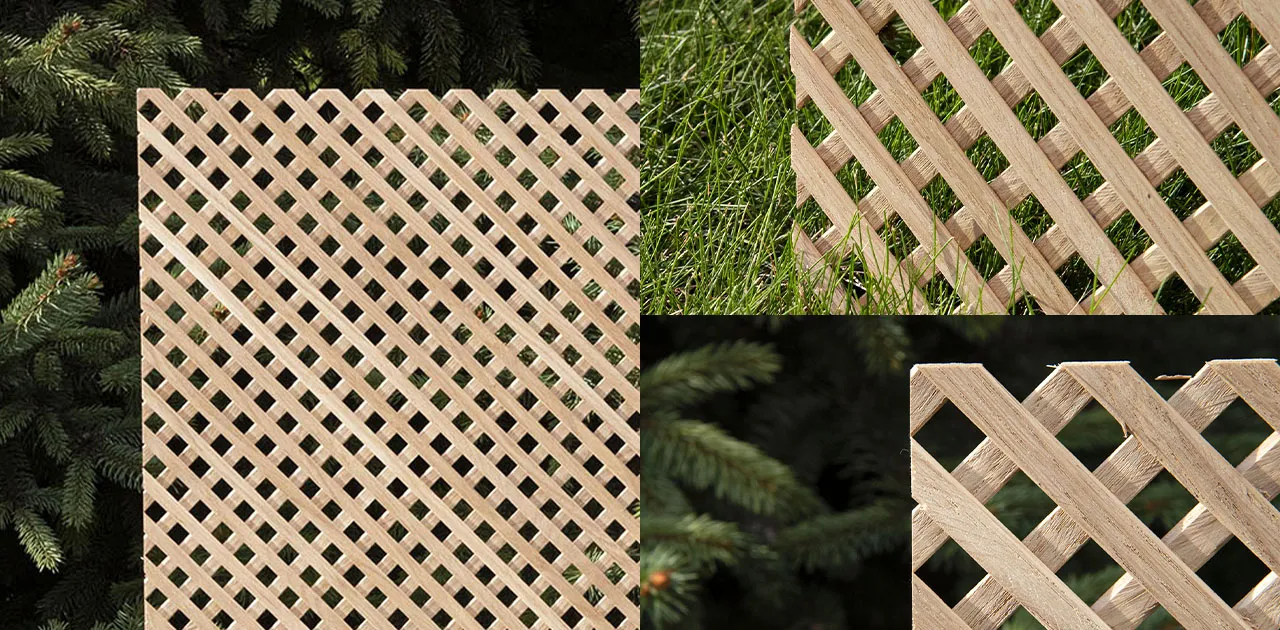
Alder is a lightweight and easy-to-work-with material, valued in the production of furniture, decorative elements, and interior finishes. This accessible wood has a pleasant color and a uniform texture.
The density of dry alder wood is 510–550 kg/m³. Hardness on the Janka scale is about 2700 N, and on the Brinell scale, it is 1.6 — 1.8. The wood has medium viscosity and sufficient strength for interior structures.
Freshly cut alder has a light-yellow or pinkish hue, which over time acquires warm reddish-brown tones. The texture is uniform and fine-grained, with inconspicuous annual rings.
This soft and lightweight wood is easy to cut, sand, mill, and glue. Alder holds paint, stain, and varnish well. The species takes toning without problems, so it is often used to imitate more valuable woods (walnut, mahogany, etc.).
FAQ
What wood species are available for order?
Our standard inventory includes decorative wooden lattices made of oak, ash, and alder. Custom manufacturing of lattices from maple, walnut, hornbeam, cherry, beech, and other species is possible (from 2,000 units).
Can I order a lattice in a custom size and shape?
We supply lattices in the standard size of 1200x620x5 mm (±0.5 mm) / 47.24″x24.4″x0.19″. We accept orders for manufacturing lattices in other formats. The minimum batch is 2,000 units.
What is the cell size of the lattices?
We offer wooden lattices with diamond and square-shaped cells. The cell sizes are as follows:
60° Diamond — 17×17 mm / 0.67″x0.67″
45° Square — 10×10 mm / 0.39″x0.39″; 15×15 mm / 0.59″x0.59″
Horizontal Square — 12×12 mm / 0.47″x0.47″
Can the lattices withstand heavy loads?
The lattices in our product range are decorative items and are not designed for significant operational loads.
Are wood lattices suitable for outdoor use?
Yes, wooden lattices can be used for exterior applications.
Can I order a small batch with samples?
We can add to your order a mixed pallet with the types of lattices you need.
What is the minimum order?
The minimum order quantity is 1 pallet.
How quickly can I receive my order?
Delivery times are affected by the order volume and destination.
How are the lattices packaged for transport?
The wooden lattices are hermetically sealed in film.