WoodWay Expert is a manufacturer and reliable supplier of furniture panels made from hardwood and softwood species.
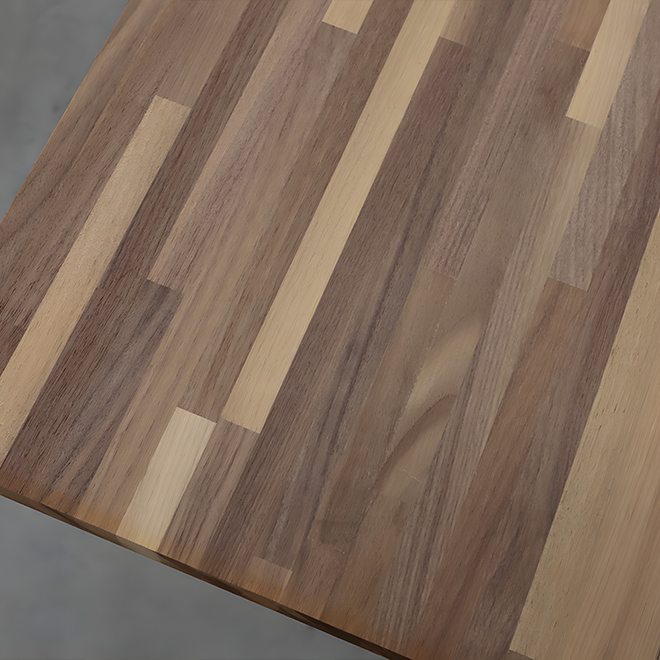
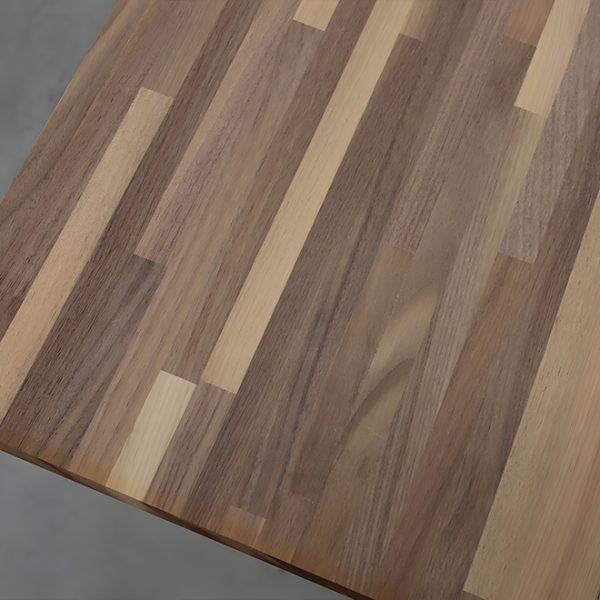
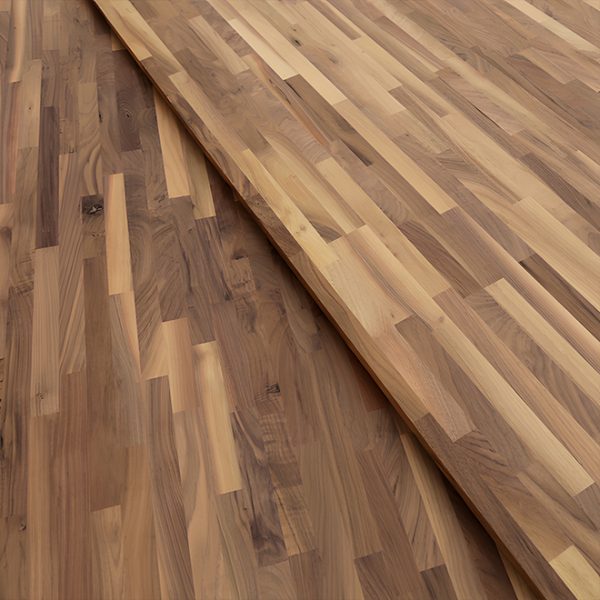
We offer wholesale orders for European walnut furniture panels—a material that accurately conveys the beauty of light-toned solid wood but is significantly more stable than solid timber.
| Panel Type | Finger-Jointed |
| Wood Species | European Walnut |
| Lamella Joint Type | Concealed “micro-finger joint” |
| Thickness | 38 mm (1.5″) |
| Dimensions | |
| Walnut Wood Density | 640-670 kg/m³ |
| Moisture Content | 8-10% |
| Surface Finish | Sanded |
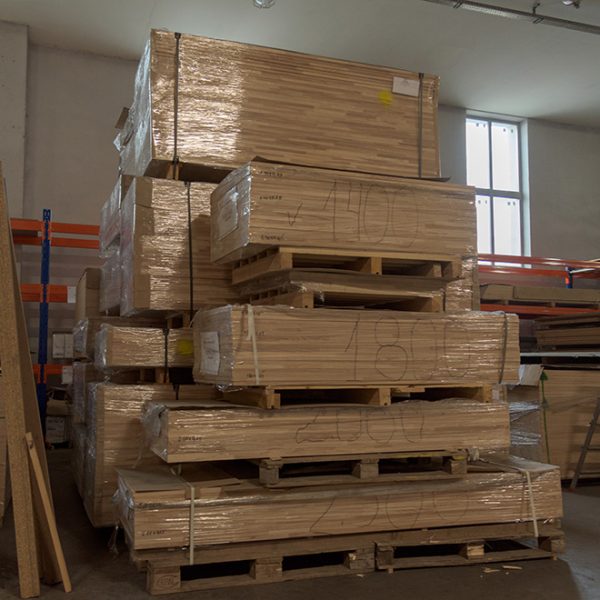
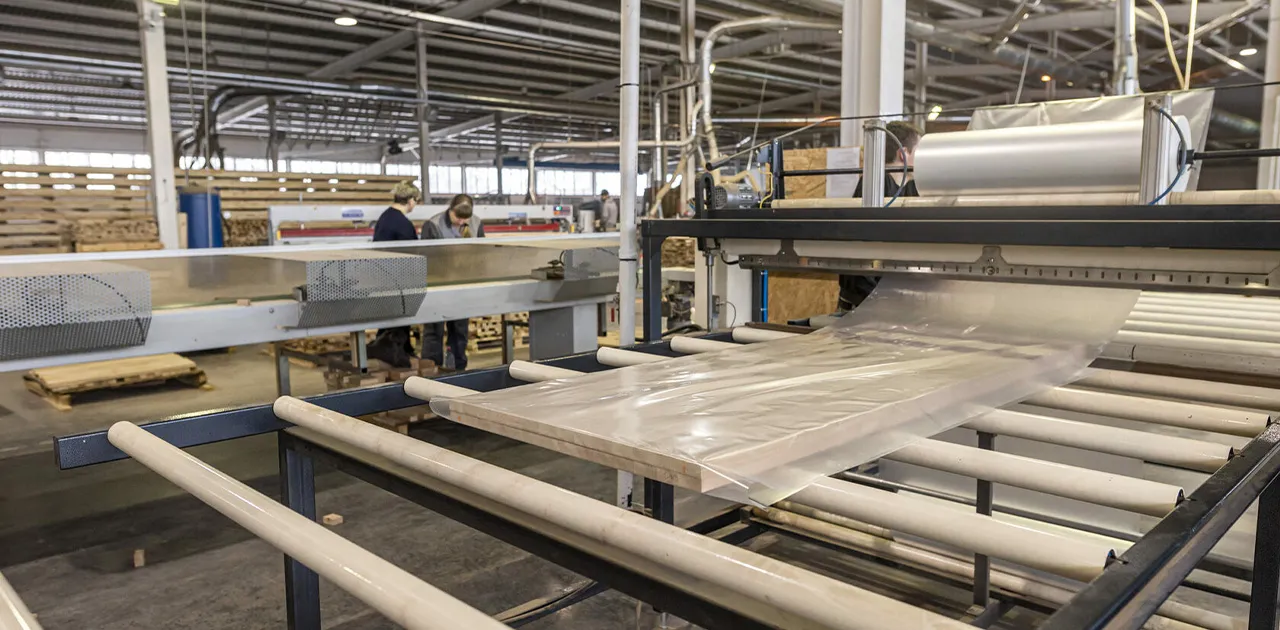
| Packaging | Each panel is hermetically sealed in film |
| Dispatch Time | 2-3 weeks after prepayment |
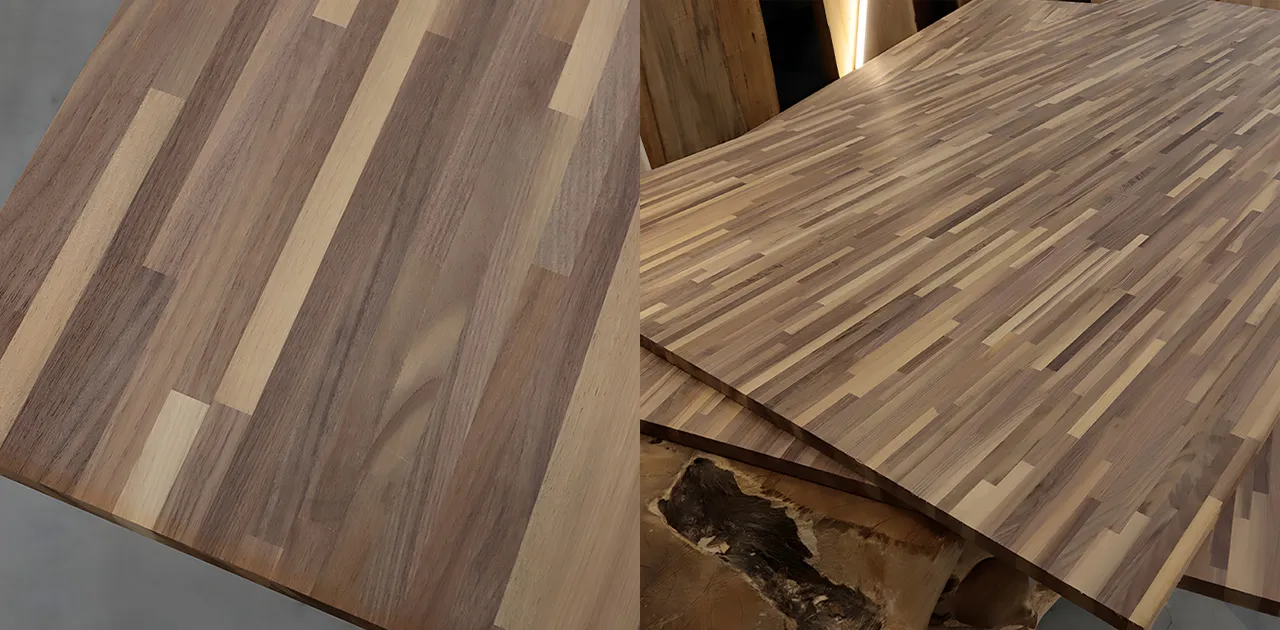
Characteristics of Grade B/B Walnut Furniture Panels
In the context of finger-jointed walnut furniture panels, Grade B/B is determined by the visual characteristics of the surfaces, not by strength parameters. All panels are manufactured using a single technology and possess high strength.
A Grade B/B furniture panel has certain characteristics related to the presence of natural wood defects. On the panel’s surface:
- Black knots up to 5 mm are permitted.
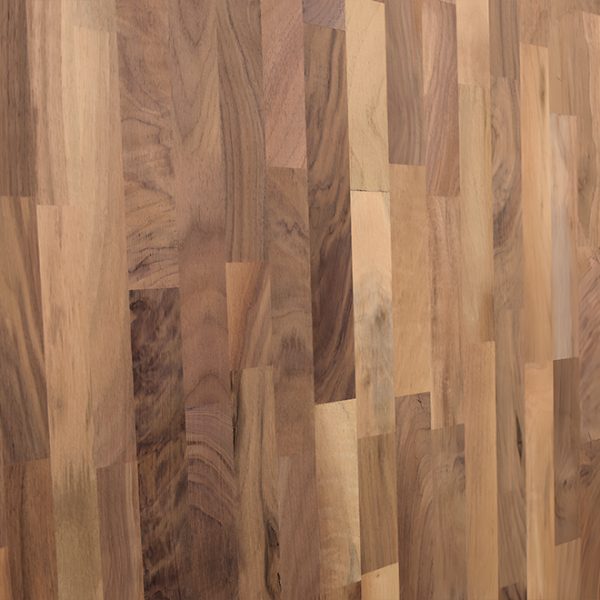
- Variations in lamella color are possible, with no perfect matching of grain pattern and tone.
- Minor gluing defects that do not affect the material’s performance are permitted.
- Sapwood may be present (up to 20%).
Production Technology of Finger-Jointed Walnut Furniture Panels
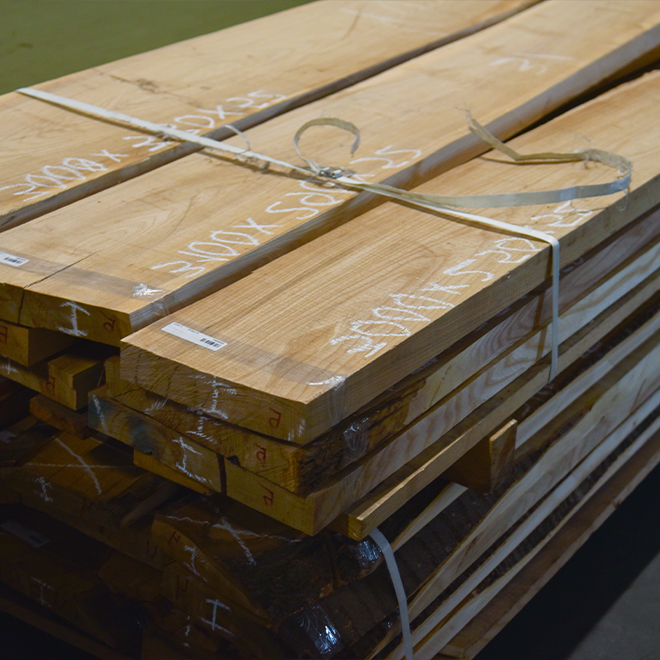
- Wood Drying. The lamellas are made from kiln-dried boards with a moisture content of 8-10%, which guarantees the material’s stability.
- Lamella Sawing. The wood is sawn into strips of a specific thickness and width. Modern machinery ensures the precise dimensions of each segment.
- Sorting. The finished lamellas are sorted by quality and size; strips with defects are removed.
- Micro-Finger Joint Milling. A special interlocking joint—the micro-finger joint—is formed on the ends of the lamellas to ensure maximum glue surface area.
- Segment Joining. The lamellas are glued together lengthwise and widthwise under a press using environmentally friendly adhesives that meet strength and safety standards.
- Calibrating and Sanding. The finished panel is calibrated to the required dimensions and sanded to prepare the surface for further finishing.
Advantages of Walnut Furniture Panels Over Solid Wood
- Stability. The wooden lamellas are made from boards dried to an optimal moisture level (8-10%). Kiln drying the wood helps eliminate internal stresses, which are a cause of deformation in solid wood. Thus, the finger-jointed panel is not prone to warping or cracking due to fluctuations in humidity and temperature.
- Structural Homogeneity. The finger-jointing process allows to create a uniform, defect-free surface.
- Wear Resistance. The load is distributed evenly across the material’s surface. The structure, with its multi-directional segments, “dissipates” point stresses and prevents pressure concentration in one area. As a result, the panel maintains its integrity even under significant loads.
- Optimal Use of Raw Materials. The finger-jointing technology allows for the efficient use of wood, minimizing waste and making production more efficient and environmentally friendly.
- Aesthetics. The wooden lamellas that make up the panel retain the wood’s texture. The finger-jointing process creates a parquet-like pattern that can be an interesting design element.
Applications of Walnut Furniture Panels
This strong and stable material is used to create products such as:
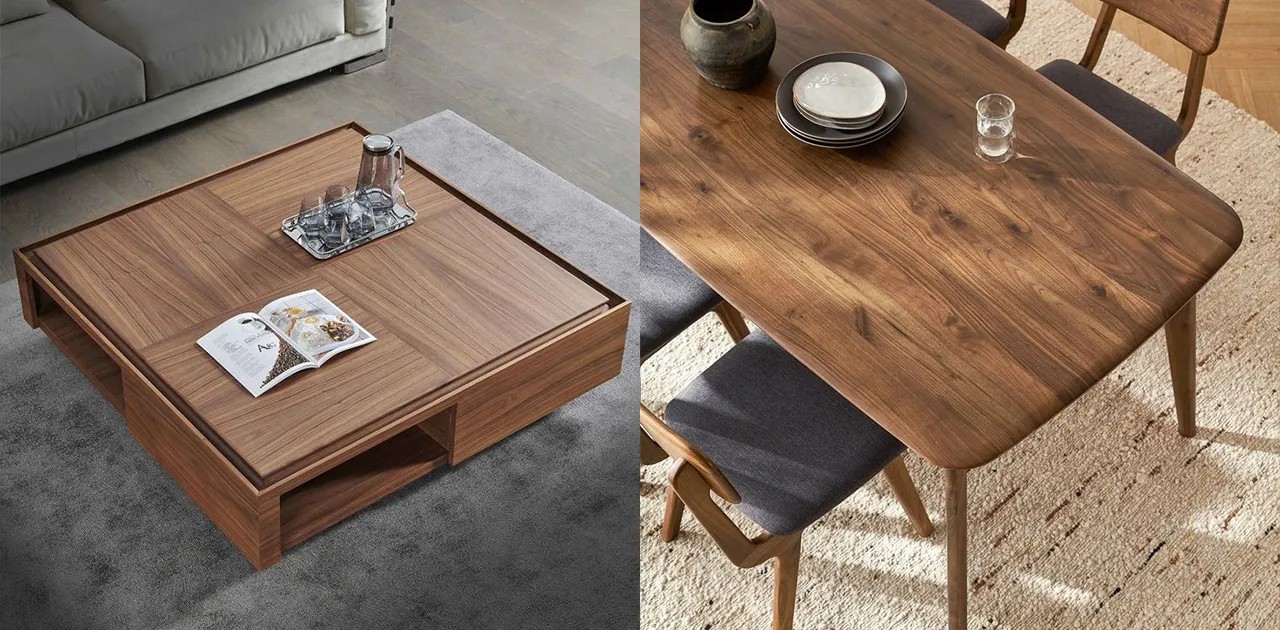
- countertops for desks, kitchen workspaces, and bar counters;
- treads for interior stairs;
- furniture fronts: doors for cabinets, dressers, nightstands, and tall cabinets;
- headboards;
- seats for bar stools, benches, and stools;
- windowsills in homes and offices;
- decorative wall panels.
European Walnut Wood: Key Parameters
European walnut (Juglans regia), also known as English walnut, is one of the most valuable hardwood species. The heartwood palette consists of a wide spectrum of shades: from light brown with a reddish tint to a rich dark brown, often with gray or purple streaks. The wood’s texture is uniform. A distinct and complex grain pattern is formed by straight or wavy fibers.
Thanks to its density (around 640-670 kg/m³) and hardness (5 on the Brinell scale), the solid wood is wear-resistant. Walnut has excellent toughness. The wood is easy to work with, and it sands and finishes beautifully. Walnut is used to make exclusive furniture and interior finishes.
FAQ (Frequently Asked Questions)
How do we guarantee product quality?
We manufacture our furniture panels in strict adherence to our technology. When an order is placed, we sign a contract that specifies the standards.
Why should you order furniture panels from us?
We have been in business since 1996. We have partners in over 30 European countries. We supply wood materials to manufacturers of various products, from furniture factories to craft workshops.
How quickly can I receive my order?
Product delivery times depend on the order volume and destination.
Do you provide product samples?
We can add a mixed pallet with materials of interest to the client’s order. The price of the mixed pallet depends on the product type.
What is the minimum order quantity?
The minimum order volume is 1 pallet.
Do you offer cutting or additional processing services?
Currently, we do not offer cutting or additional processing services. We supply finished furniture panels in various thicknesses, grades, and sizes.